

HandicapMD Helping Residents Secure a New York Handicap Parking Placard Faster and With Clear, DMV-Ready Documentation
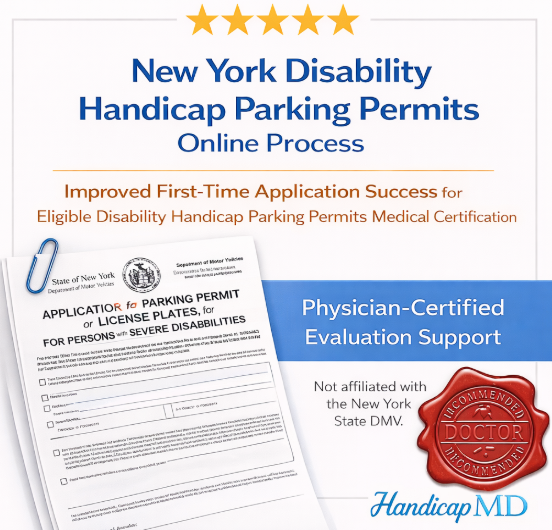
new york handicap disability parking placard evaluations online
new york disabled parking permit medical certification assistance
new york disability permits evaluations online
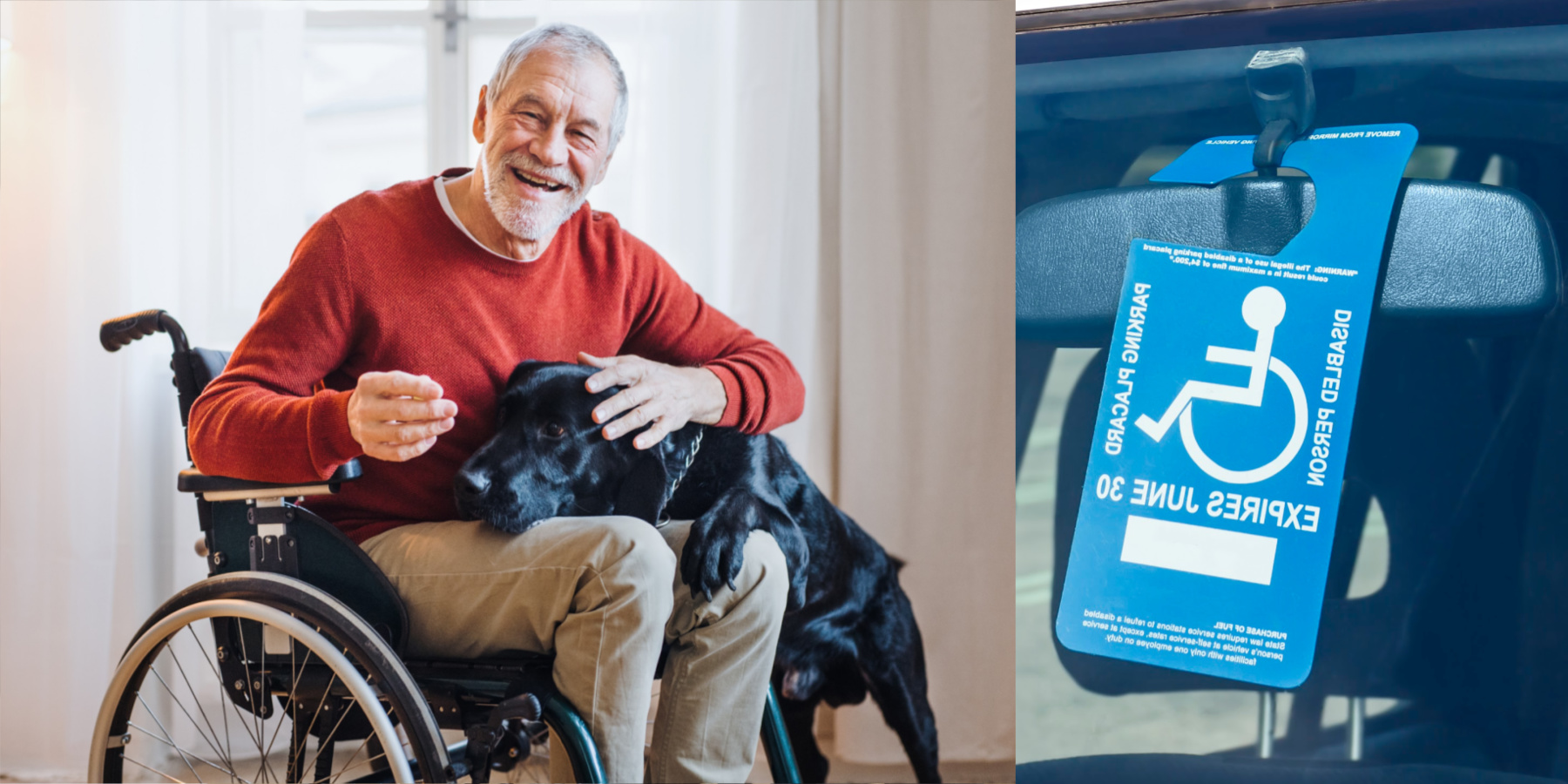
get disabled permit online
disability parking permit online
Guidance for Buffalo and New York City, with a clinician-led process designed to simplify the medical certification for a New York disability parking permit
Across the state, many applicants report that the most difficult part of obtaining a disability parking accommodation is not the final submission of the packet. Instead, the challenge often centers on the medical certification portion: finding an available clinician, explaining functional limitations in a way that aligns with the criteria on the state form, and ensuring the documentation is complete enough for the issuing office to process without avoidable back-and-forth. New York’s system can add complexity because disability plates are generally issued through DMV offices, while parking permits are issued by local governments rather than the DMV. The state’s published guidance notes this division directly and emphasizes that filing a false application is a crime.
“People are often told, ‘Just get the form signed,’ as if it’s a quick administrative task,” said Dr. Eric Jackson-Scott, MD, MPH, Medical Director at HandicapMD. “In practice, the medical certification step requires clarity and accuracy. Walking tolerance, oxygen use, assistive devices, fall risk, and cardiopulmonary limitations can all be relevant. The patient deserves documentation that reflects their real functional limitations, and the issuing office needs information that aligns with eligibility standards.”
What the expanded program includes
HandicapMD’s New York program is built around a single, defined objective: support the clinical evaluation and medical certification portion of the disability parking application process in a way that is clear, functional, and consistent with common submission expectations. The program does not replace any issuing authority. Instead, it focuses on the step many applicants struggle to complete: a clinician-led evaluation that documents functional limitations and completes the medical certification portion when clinically appropriate.
The expanded New York program includes four main enhancements:
New York-specific documentation guidance. The program provides practical, state-focused guidance on how medical certification documentation typically fits into a New York application packet, with attention to the state’s form structure and common points of confusion. The standard statewide application (MV-664.1) is used by residents to apply for plates or parking permits for people with severe disabilities and includes medical certification and other requirements.
Buffalo-specific support pathway. Buffalo residents frequently search for local guidance on how to get a handicap placard in Buffalo NY, including where to obtain an application, how to submit, and what distinguishes temporary versus permanent permits. The City of Buffalo publishes disabled parking information describing temporary permits (issued for periods of six months or less) and permanent eligibility descriptions, and it identifies city contact points for disabled parking permits.
HandicapMD’s Buffalo pathway is designed to help patients prepare the medical certification portion with functional detail and reduce incomplete submissions.
New York City handicap parking permit support pathway. New York City has distinct rules and permit categories that are frequently misunderstood, particularly by people who assume statewide permits function the same way in the five boroughs. NYC DOT’s Parking Permit for People with Disabilities (PPPD) program describes documentation requirements, including identification and registration documentation, and outlines a review process that includes submission of completed applications for medical review.
HandicapMD’s NYC pathway addresses the medical certification documentation step and explains how documentation can be structured to support the correct pathway, when medically appropriate.
Mobility-focused clinical review. The clinician evaluation emphasizes functional, real-world limitations that commonly matter for disability parking eligibility: walking distance tolerance, need for rest breaks, balance and fall risk, use of mobility aids, oxygen dependence, severe joint limitation, and cardiopulmonary limitations affecting safe ambulation.
Why the medical certification step is often the bottleneck in New York
New York’s published instructions and local issuing practices emphasize that disability parking is not a single statewide workflow. The DMV’s guidance for parking for people with disabilities states that plates are issued at state and county DMV offices, while permits are issued by local governments and not the DMV.
The MV-664.1 application itself instructs applicants to contact a local issuing agent and notes that New York City has distinct instructions and submission requirements.
This division can be confusing for applicants who are already navigating mobility limitations, chronic illness, recovery from surgery, or other disabling conditions. It can also cause delays when applicants submit a packet to the wrong office, or when the medical certification portion lacks the functional detail needed for the issuing office to determine whether the application is complete.
Common issues reported by applicants and local issuing offices include:
Appointments that are too brief to capture meaningful functional limitations (for example, how far a person can walk safely and whether rest breaks are required)
Clinicians who are unfamiliar with the expectations of disability documentation forms
Incomplete medical certification sections that omit relevant functional descriptors
Uncertainty about whether a condition is temporary or permanent and what supporting documentation is needed
Confusion about where to submit (local issuing agent versus DMV for plates, and NYC DOT for NYC-specific permits)
HandicapMD’s expanded program is designed to reduce these friction points by structuring the clinical evaluation around functional mobility and documentation clarity, and by providing guidance on common submission pathways based on location.
HandicapMD provides telehealth evaluations led by licensed clinicians. The evaluation focuses on functional limitations tied to disability parking eligibility and the medical certification requirements on common application forms. If the patient meets criteria and certification is clinically appropriate, the clinician completes the relevant medical certification documentation used in the application packet. The patient is responsible for submitting the completed paperwork to the appropriate issuing authority based on where they live and which permit type is being requested.
HandicapMD does not issue disability parking permits, placards, or plates. Issuance remains the responsibility of the appropriate governmental authority, such as a local issuing agent or the DMV for plates, and for NYC-specific PPPD permits, NYC DOT with medical review as outlined in the city’s published materials.
Clinical focus: function, safety, and documentation clarity
The expanded program uses a functional framework because disability parking eligibility is commonly tied to mobility and safety limitations rather than a diagnosis alone. While diagnosis can provide context, the decisive question for many applicants is how a condition affects walking tolerance, balance, and safe independent travel.
During the clinical evaluation, clinicians commonly review:
Walking tolerance: How far the patient can ambulate safely without needing to stop, rest, or sit
Rest breaks: Whether symptoms require frequent pauses due to pain, shortness of breath, fatigue, or instability
Mobility aids: Use of a cane, walker, crutches, wheelchair, braces, prosthetic devices, or assistance from another person
Oxygen dependence: Whether portable oxygen is required during mobility-related activities
Fall risk and balance: Whether instability, neuropathy, vestibular symptoms, medication side effects, or orthopedic limitations increase safety risk
Orthopedic and neurologic limitations: Severe joint restrictions, significant gait impairment, or neurologic impairments that affect ambulation
Cardiopulmonary limitations: Symptoms and conditions that limit safe ambulation distance and increase risk with exertion
Visual impairment considerations: When relevant to safe navigation and independent travel
This functional focus is designed to support complete, coherent medical certification documentation when certification is clinically appropriate.
Buffalo pathway: local clarity for a high-search market
The City of Buffalo provides public information describing disabled parking permits, including definitions and time frames for temporary permits and the general concept of permanent eligibility.
Buffalo’s public resources also identify contact information for the city’s disabled parking office, including an office location and phone number.
Because applicants often search for “Buffalo disabled parking permit” and related queries, HandicapMD’s expansion adds a Buffalo-focused pathway that addresses two recurring issues: how to prepare the medical certification portion clearly, and how to assemble a submission-ready packet aligned to local expectations.
“If you live in Buffalo, you understand how weather and distance can change the risk profile for someone with mobility limitations,” Dr. Jackson-Scott said. “Snow, ice, and uneven surfaces can convert a manageable walk into a fall risk. If a person’s limitations align with eligibility standards, the medical documentation should describe the functional reality precisely.”
Within the Buffalo pathway, HandicapMD emphasizes a documentation approach that captures the lived experience of mobility limitations. Clinicians may document how pain, shortness of breath, instability, or fatigue present during routine tasks such as walking across a large lot, moving from a parked car to a pharmacy entrance, or navigating winter surfaces that increase fall risk.
The Buffalo pathway also reinforces the distinction between temporary and permanent limitations, consistent with Buffalo’s public description that temporary permits are issued for periods of six months or less.
New York City pathway: addressing a different permit reality
New York City’s PPPD program includes additional requirements and a review process described in NYC DOT materials. NYC DOT’s public guidance indicates that applicants must provide identification and registrations to be listed on the permit, and that the PPPD Unit will review documentation for completeness before submission for medical review as outlined in the PPPD application materials.
These distinctions can create confusion for residents who assume that a statewide process applies identically within NYC. The MV-664.1 application itself includes New York City instructions and references NYC-specific submission steps.
HandicapMD’s NYC pathway addresses the medical certification documentation step and helps patients understand how documentation can be structured to support the correct pathway when medically appropriate. The program is designed to reduce the most common NYC issues reported by applicants:
Uncertainty about whether the statewide permit or the NYC-specific PPPD permit applies to their situation
Confusion over documentation completeness requirements and the consequences of incomplete submissions
Difficulty obtaining medical documentation that clearly supports mobility limitations in a dense, high-traffic environment
Delays caused by missing ID or registration materials required for NYC submissions
“New York City residents don’t need more complexity—they need a clear, medically grounded process,” Dr. Jackson-Scott said. “When a person’s mobility impairment significantly limits safe ambulation and requires an accommodation, documentation should be coherent and complete so the reviewer can make a decision based on the facts.”
Serving the real informational need behind common searches
HandicapMD’s New York expansion is designed to address the informational gap reflected in common searches that signal confusion about process, location differences, and the medical certification step. These searches include terms related to New York disability parking placards, disability plates, the MV-664.1 application, NYC PPPD permits, and local pathways such as Buffalo.
The program’s approach prioritizes clarity and compliance over marketing language. HandicapMD’s goal is to help eligible residents complete the medical certification step in a way that is clinically accurate and submission-ready, reducing avoidable delays tied to missing details or incomplete forms.
Compliance and responsible use
HandicapMD emphasizes responsible use of disability parking accommodations. New York’s DMV guidance states that permits and plates may be used only when the person with the disability rides in or drives the vehicle and highlights that filing a false application is a crime.
HandicapMD’s clinicians evaluate based on reported functional limitations, relevant medical history, and clinical judgment. Certification is provided only when clinically appropriate.
Learn more: https://www.handicapmd.com/new-york/handicap-parking-placard
About HandicapMD
HandicapMD is a clinician-led telehealth platform focused on disability documentation. The platform supports the medical certification step commonly required for disability parking placards, permits, and disability plates application packets. HandicapMD emphasizes function-focused evaluations, clear documentation, and patient-friendly guidance aligned to common submission workflows.
Ena Darron
HandicapMD
+1 833-368-3825
email us here
Visit us on social media:
Instagram
Facebook
YouTube
Get Your New York Handicap Placard in 3 Easy Steps
Legal Disclaimer:
EIN Presswire provides this news content "as is" without warranty of any kind. We do not accept any responsibility or liability for the accuracy, content, images, videos, licenses, completeness, legality, or reliability of the information contained in this article. If you have any complaints or copyright issues related to this article, kindly contact the author above.
