
Bhutan becomes first country to adopt ‘gross ecosystem product’ at national level
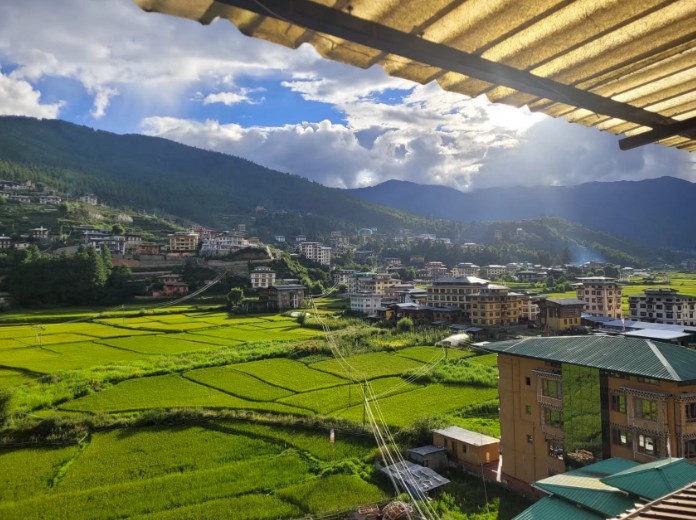
The Paro Valley in Bhutan, photo credit Tong Wu
At an event during New York Climate Week, the Bhutanese Prime Minister announces its GEP as part of strategy to develop sustainably
NEW YORK, NY, UNITED STATES, September 23, 2026 /EINPresswire.com/ -- Today Bhutan becomes the world’s first country to adopt gross ecosystem product – GEP – at the national level. His Excellency Prime Minister Tshering Tobgay announced the country’s calculation of GEP at $6.2 billion, about twice the size of the country’s gross domestic product (GDP). This follows on Bhutan being the world’s first carbon-negative country and the pioneer of gross national happiness (GNH).As Prime Minister Tobgay emphasized in remarks at an event hosted by the Bhutan Mission in New York: “For decades, Bhutan has believed that development cannot be measured by economic growth alone. By measuring GEP alongside GDP and GNH, we recognize nature as the foundation of our economy and wellbeing. What we measure, we value. What we value, we protect. And what we protect today will sustain Bhutan for generations to come.”
The Stanford University-based Natural Capital Alliance worked with the Bhutan government to calculate GEP and is continuing to support their National Statistics Bureau in deploying the metric in policy and finance decisions.
“GEP empowers Bhutan to pursue a nature-positive path to economic prosperity. While natural capital approaches are not a silver bullet, they offer a reliable guidepost for national and regional leaders in balancing these dual priorities. Bhutan has long been a step ahead, understanding how human progress and nature are not in conflict, but rather inseparable,” said Gretchen Daily, faculty director of Stanford NatCap and a leader of its work in Bhutan and many other countries.
Beyond GDP: GEP around the world
The United Nations’ ongoing “Beyond GDP” initiative recognizes that GDP cannot fully measure performance or progress in many vital arenas – and especially not in human development and sustainability. This is especially true with respect to nature, which remains largely invisible in economic accounting. Yet forests, wetlands, rivers, lakes, farms, and even urban nature underpin human wellbeing and economic activity. This is where GEP comes in. Measured in parallel to GDP, GEP reveals the value of the goods and services that flow from nature to people (this is calculated in terms of the quantity of the benefit received multiplied by a monetary measure of value).
GEP enables the design and implementation of new financing mechanisms, market opportunities, and public investment pathways. In the Emilia Romagna region of Italy, for example, GEP is being used to guide public and private investments in ecosystem recovery from extreme flooding. In Colombia, GEP has been used to prioritize financing for forest restoration to support tourism development on the Gulf of Morrosquillo. In China, GEP is being used to support financing for sustainable land and water management and as a crucial benchmark of administrative performance. And recently in Mongolia, former Prime Minister Zandanshatar Gombojav emphasized the importance of GEP by arguing that, “What a nation cannot measure, it cannot defend.”
Bhutan’s natural capital
Everywhere, natural capital – lands, waters, and their living nature – is essential to economic resilience and performance. In Bhutan, hydropower depends on glacier- and rain-fed rivers and forested watersheds. Agricultural production relies on healthy soils, reliable water, bees and other pollinators, and natural pest control. Tourism is built around scenic forests, mountains, and cultural landscapes. Bhutan’s ecosystems also sequester and store large amounts of carbon that would otherwise exacerbate global climate change. And forests and wetlands control erosion, stabilize slopes, and soak up flood waters, thereby acting as vital infrastructure in the face of worsening climate impacts. The values of these ecosystem services – and many more – are reflected in GEP.
The official GEP calculation announced by Bhutan reveals the centrality of natural capital to the national economy, highlights Bhutan’s contribution to global sustainability, and helps identify new avenues for financial and policy innovation. By being the first country to adopt GEP at the national level, alongside its GDP and GNH, Bhutan once again demonstrates its leadership in pioneering new approaches to sustainable development in an increasingly uncertain world.
For more about this work in Bhutan: Gross Ecosystem Product (GEP) Accounting & Application (Bhutan) | Natural Capital Alliance. It is supported by the Enlight Foundation.
Lindsay Louie
Enlight Foundation
email us here
Legal Disclaimer:
EIN Presswire provides this news content "as is" without warranty of any kind. We do not accept any responsibility or liability for the accuracy, content, images, videos, licenses, completeness, legality, or reliability of the information contained in this article. If you have any complaints or copyright issues related to this article, kindly contact the author above.
